

Understanding and Addressing Social Drivers of Health
Recognizing the foundational influence on a person’s health and the contributions to health inequities, social needs have become a focus for many health system improvement efforts. There is a growing call to screen and address people’s social drivers of health. We believe strongly that these programs will only be effective if they authentically engage people with lived experience in their conceptualization and implementation.
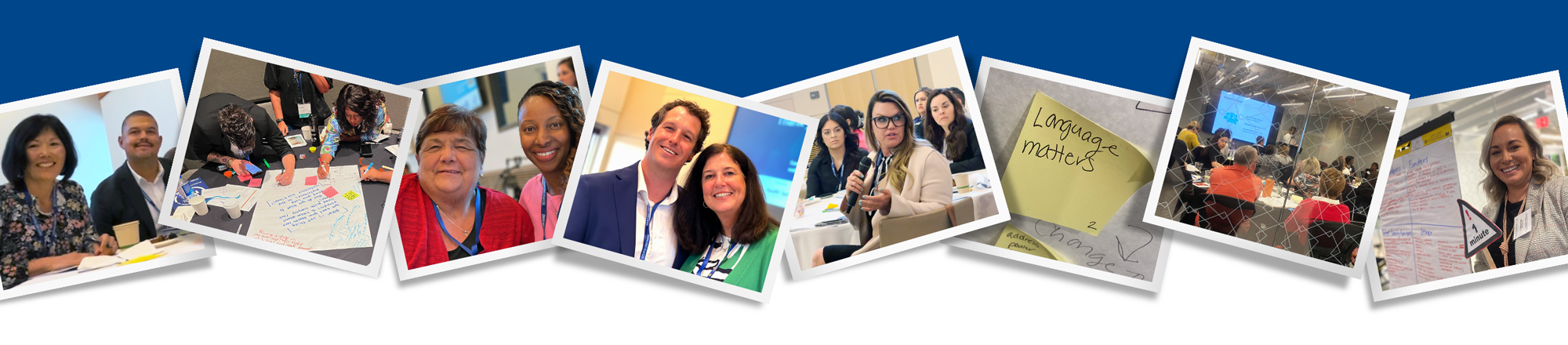
PFCCpartners facilitated a Challenge Café and a Knowledge Café that built on each other, fostering interdisciplinary collaboration around addressing social drivers of health. Each Café enabled a diverse community of patients, family caregivers, community members, clinicians, health system leaders, and other stakeholders to provide valuable insights about successfully screening and addressing social needs. We understand that it is essential to listen first, so the Challenge Café was an opportunity to address the common concern about screening for social drivers of health without resources to address those expressed needs. The Knowledge Café then elevated solutions to the challenges that were raised.
“If we don’t take a person-centered approach to SDOH screening, we risk conveying that improving our data is a priority over authentically supporting people’s social needs.” - Stephen Hoy, PFCCpartners


Our Process
Participants came together to collectively pinpoint and articulate key obstacles and hurdles they were experiencing in SDOH screening initiatives. The insights and queries that emerged from this rich and varied dialogue then served as the foundation for the subsequent Knowledge Café, focusing it on the real-world concerns and perspectives. This iterative process not only ensured that the discussions were rooted in the real challenges faced by healthcare stakeholders, but also allowed for a more holistic set of solutions and strategies.
The Knowledge Café provided a platform for collaborative learning, generating insights, and solutioning for enhancing the effectiveness of SDOH screening efforts. The session emphasized the importance of inclusivity, collaboration, and addressing historical challenges to create more equitable and responsive healthcare environments.
Key Insights and Takeaways
The collective knowledge of participants produced key considerations for supporting SDOH in the health system.
Alignment of Health System Entities and Community Supports
•. Foster reciprocal collaboration between traditional health system and community organizations that have an established and trusted history of providing social support services.
•. Involve Community Health Workers (CHWs) in both understanding social needs and solutioning improvements in addressing them at a greater scale.
•. Leverage discharge planning processes in hospital and other health system settings. Participants noted the importance of initiating planning activities for a successful discharge early and often during a “stay.”
•. Consider “out-of-the-box” partnerships and make a plan for sustaining those collaborations.
Follow-Through for an Inclusive SDOH Screening Program
•. Maintain a community resource list that screening staff will have easy access to.
•. Educate screening staff on cultural humility, sensitivity, and establishing relationships.
•. Ensure accessibility of timing and tools for screening.
•. Participants suggested creating billable appointments for addressing social needs, so they are not “added on” to already stretched appointments.
Inclusive SDOH Screening Program Characteristics
• Address and acknowledge historical mistrust, and social contexts of these efforts. Be informed about the historical traumas that impact people’s circumstances.
• Engage staff that are representative of your community in conduct screenings.
• Using accessible communications, include translations for people with Limited English Proficiency (LEP) and literacy levels.
• Team-based approach to enable person-centered and accessible screening. Include non-clinical staff in discussions about the impact of social needs.
Engage People with Lived Experience…
…to create connections with community based organizations.
…to provide education and support to screening staff.
…to communicate about the screening program to community members.
Characteristics of a Trustworthy Organization
Key ingredients for building trust includes reciprocal communication, power sharing/shift, aligning around community needs, and consistency by doing what you say you will do.
Top 3 Discussion Themes:
1. Partner with Community Health Workers
2. Out-of-the-Box Partnership and Collaboration
3. Education for Healthcare Organizations and the Community
Raw Data, Information and Insights
-
• Ask CBOs for their perspective
• Create partnerships with CBOs (refer to CBOs)
• Burden of accepting referrals from healthcare
• Hire Community Health Workers into clinical setting
• Make a part of treatment team w/goal of developing a more robust discharge plan
• Community Health Workers (CHW) liaison post discharge with a patient and community supports
• Map journey of people to reduce duplication
• Research the missions of organizations
• Common communication channels/#’s
• Common coding (z-codes, d-codes, etc)
• Build relationships across sector first
• Take time to develop cultural understanding of each other’s sector
• Tele & in-person options
• Story sharing – qualitative data
• Meet with community heads who work with these programs and others who are trusted
• Learn how to fight fair
• Hospitals need to stop over-promising and practice/demonstrate accountability
• Simple, non-jargon language
• Bidirectional data exchange through shared EHRs
• Partnerships with CCBHCs
• CBOs – providers (partnerships that include funding)
• Sharing what is available (unsiloing)
• Program evaluation (CBO perspective)
• CHWs embedded to provide SDOH screenings
• Culturally and Linguistically Appropriate Services
• Consistent and flexible data sharing
• Co-locating staff in shared spaces
• Interoperable data and integrated into HER
• Align with set goals and values that community providers and hospitals have
• Common enrollment forms/process with common language
• Know your community and partner
• Racial and ethnic and all concordance
• Non-traditional hours!!
• Participate in coordinated care councils alongside CBOs, not LEAD!
• Respect expertise of organizations
• PDSA – measure, analyze and publish
• How can payers help CBOs bill to be sustainable
• Ask questions of community leaders
• Consistent communication about shared clients/patients
• Warm hand-off
• Eligibility question built within assessment
• Hospitals need to be flexible in money they provide to CBOs (+1)
• Invest in CBO infrastructure to help shared members
• Community participatory research
-
• Environmental scan to find resources
• Inclusive of all social needs
• Education
• Data sharing
• How to engage patients?
• Gather feedback from staff, patients, etc
• Connectivity across settings
• Interoperability
• No wrong door
• Workflow design
• Timing admissions
• Provide measures
• Provide resources
• Staff working at top of license
• Lower threshold to receive benefits or are adjusted for communities
• Partnerships to build relationships – findhelp.org
• Speaking the language of the person you screen – hire more Spanish speaking staff
• Which screening tool will you use?
• Implement SDOH assessment into every phase of patients care
> Admission, Tx rounding, D/C, Post D/C
• Provide trauma informed spaces for staff and clients (and policies)
• Have structures that are localized
• Break out categories
> Food, housing (separate questions)
• Connect to local community leaders – localized structure
• Get training that can be reimbursed
• Enable healthcare staff to build rapport first
• Get funding
• Assessment of barriers
• Closed loop referral
-
• Represent who you serve!
• Universal
• Team approach!
> Social worker/nurse that CHWs refer to
• Assess spectrum of need
• Don’t ask a question if there is no way to respond
• Sensitive to literacy levels
• Not too long
• Staff representative of population being served
• Different languages, providing screening in the language of choice
• Ensuring complete understanding of barriers and addressing all core issues
• All SDOH are looked at with the lens of diversity, equity, and inclusion
• Different ways of collecting info
• Interview
• Self-written, etc.
• Follow through on completed screening
• If interview questions:
> Who is asking?
> Most trusted?
> Culturally inclusive
• Scripting – individualized organic
• Ask about racial trauma
-
• Education – nutritious foods
• Conduct an environmental scan
• Focus group around a community meal
> To solicit input about services received
• Hire a dietitian
• What are the barriers?
• Conduct a community needs assessment
• Provide info on what the barrier is
• Hire, train and support a CHW to provide resource linkages
• Use “on the table” intervention
• Pay them for their time!
• Community listening sessions that are community led
• Provide child care
• Cooking classes + food to use + transport
• Local investment to build programs
• Rocilizing the community to identify local resources – people/vendors
• Define physician activity
> What can you do at home?
-
• Sustainable and longevity
• Intentional – not savior complex
• Focusing on communities’ strengths
• What is the community asking for vs. “mandates”
• Does the organization give information back to the community?
• Is the organization/staff a part of the community?
• Don’t over inflate capacity
• Consistent interaction
• Are there people with lived experience in the organization?
• Follow their lead
• Open + honest + genuine communication + connection
• Does screening lead to a low-barrier service?
• Reciprocal and imitate action/support
• Resources are vetted, helpful, impactful and available
• Collaborative partners
• Demonstrated community partnerships
• Mission, vision, values need to align with community needs
• Transparency
> Why
> How
> What
> Who
• Express the why
• Conversational – true desire for understanding
• Neutral funding, business case may inform priorities
• Autonomy to not respond… and it will not influence my care
-
• How does screening work across the continuum of the system? (standardization)
• What evidence based evaluation tools can be used to assess social drivers?


Sign up to stay in touch with PFCCpartners!
Sign up for PFCC Conference updates, PFCCpartners news, invitations to meetings and workshops, personal messages from Libby, and our latest engagement opportunities.